








Shaving your beard: 3 steps to a perfect shave
Shaving your beard: 3 steps to a perfect shave
Learn how to shave your beard properly.
First, the question arises: dry or wet shave? There's no blanket answer to this. A wet shave is more thorough and allows for precise contours, but it takes longer and requires more preparation. In return, the razor glides smoothly over the skin and protects it with shaving oil or foam. However, the blades must be changed frequently, otherwise pimples and inflammation can occur. Dry shaving is quicker and often gentler on the skin, but it can sometimes leave stubble, especially with strong beard growth. No matter what you choose: remember aftercare.

I. Your skin type determines your shaving routine
Since every skin type has its own needs, there are various razors and care products for every skin requirement. If your skin is extremely sensitive after shaving, a dry shave with an electric shaver and gentle care may be the better choice. It's important to know your skin type to avoid pain, inflammation, and irritation. Don't know how to classify your skin type? Then check out this article and consider which category you would fit into.

#1: Dry Skin
Generally, an electric shaver is gentler on the skin. If you still want to wet shave, let shaving foam, soap, or gel work long enough, use sharp blades, and always shave with the grain to avoid razor burn and pimples. Afterwards, be sure to use an aftershave! Natural products like aloe vera are particularly cooling. If you opt for dry shaving, remember a pre-shave product: It helps to raise the beard hairs and ensures a smoother shave. Whether wet or dry, rich aftercare is a must, ideally with products for sensitive skin like an aftershave balm.
Lucky you! You can pretty much do what you want, but still be kind to your skin and follow the steps listed below.
Here, the pre-shave routine is particularly important: cleansing with a good exfoliant is half the battle. Dry shaving is also recommended here for similar reasons as with dry skin. Because oily skin is just as prone to razor burn and pimples.
II. When is the right time to shave?
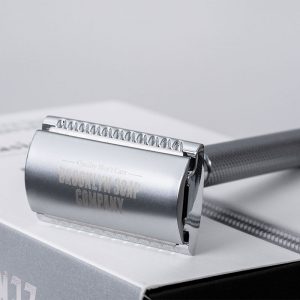
After showering, your beard hairs are softened and pores are open, perfect conditions for a thorough and gentle shave, especially with a wet shave using our safety razor. Shaving before showering can be useful if you want to wash off care products with warm water or remove residues afterwards. Our tip: If you have sensitive skin or are prone to ingrown hairs, it's better to shave after showering.

III. Groomed Man's Shaving Tools
Let's be honest: a razor and shaving brush holder brings elegant 50s flair to your bathroom. But straight razors aren't as easy to handle as electric trimmers or safety razors. In our fast-paced times, there often aren't 15 minutes available in the morning in the bathroom, and a straight razor plus lack of time and sleepy eyes? Ouch. Luckily, there are enough alternatives that we'll introduce to you so you can shave properly and avoid nasty scars.

#1: The straight razor
The classic among tools. No compromises here. Quality comes at a price. Because a straight razor comes with soap and a brush. Please don't cut corners here, you won't be doing anyone any favors. Alternatively, shaving cream or shaving gel can also be used. The main thing is that it foams.
Before every shave, it must be ensured that the blade of the straight razor is sharpened. Sharpening is best done with a leather strop. This is used whenever the razor pulls at the beard hairs rather than cutting them. If you don't know exactly how to sharpen your straight razor, there are enough barbers who can show you how to do it or where you can occasionally take your razor. The effort is worth it, straight razors simply produce a great result. The straight razor should be applied at an angle of 30° to 40°. To begin with, it is advisable to shave with the grain. For minor improvements, you can then shave against the grain selectively (!). For beginners, smooth areas, such as the cheek, are suitable for testing your talent with the razor and getting a feel for it.
#2: The electric shaver
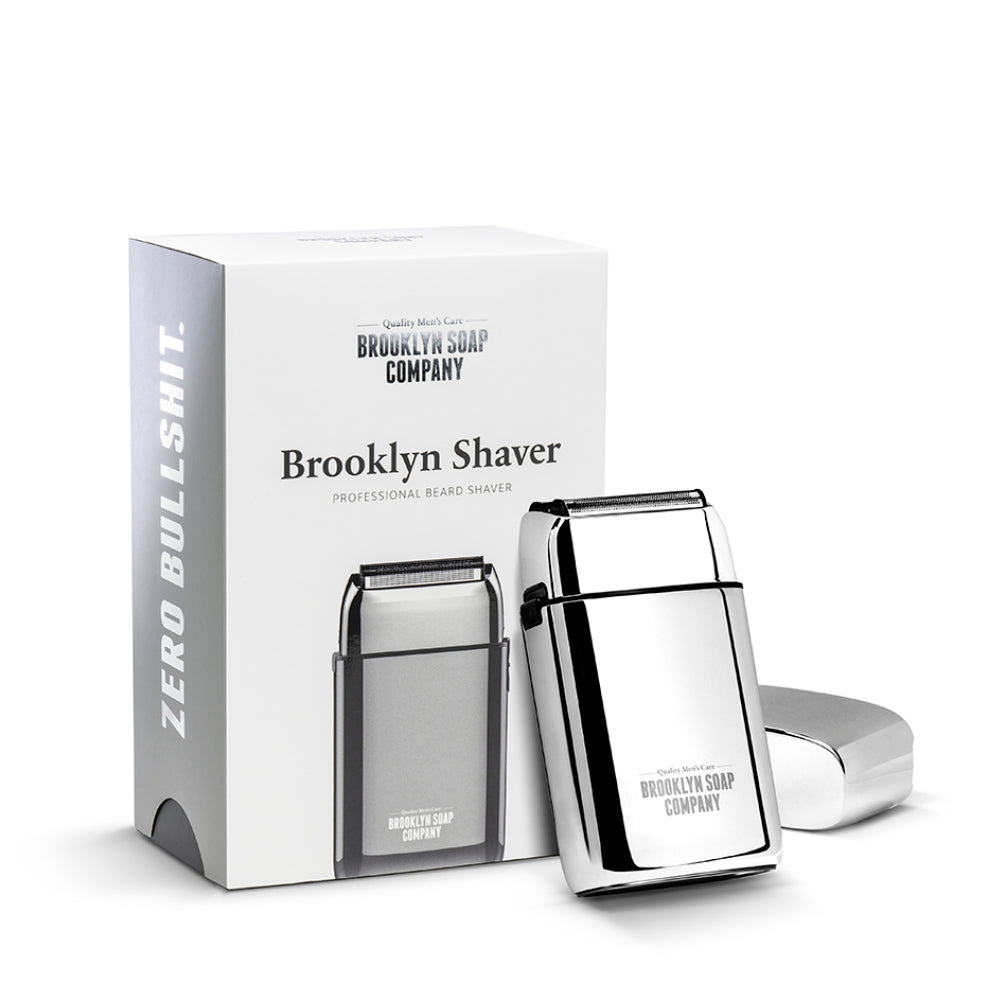
Since the electric shaver was invented in the 1930s, 60% of men shave dry. Why? Simple, uncomplicated, gentle. It's not as thorough as a wet shaver, but definitely gentler on your skin. Perfect if you already have sensitive skin. And: If you're going for a three-day beard anyway, then this is a decisive factor. Because electric shavers never shave completely smooth, so some stubble will always remain.
#3: The wet shaver
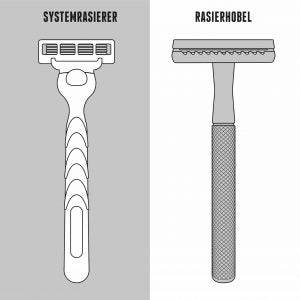
Really thoroughly, so you might not even have to shave daily. In addition, you are not dependent on electricity, and you can theoretically shave in a wooden cabin somewhere in the forest. However, the risk of injury is higher here. And even if you don't injure yourself during the actual shave, the skin can still become very irritated. Additional pre- and aftershave products are therefore also necessary here. They soften the hair before shaving and hair removal, and afterwards they soothe your skin. Important: Always use sharp blades, like those of our safety razor.
#4: The beard trimmer
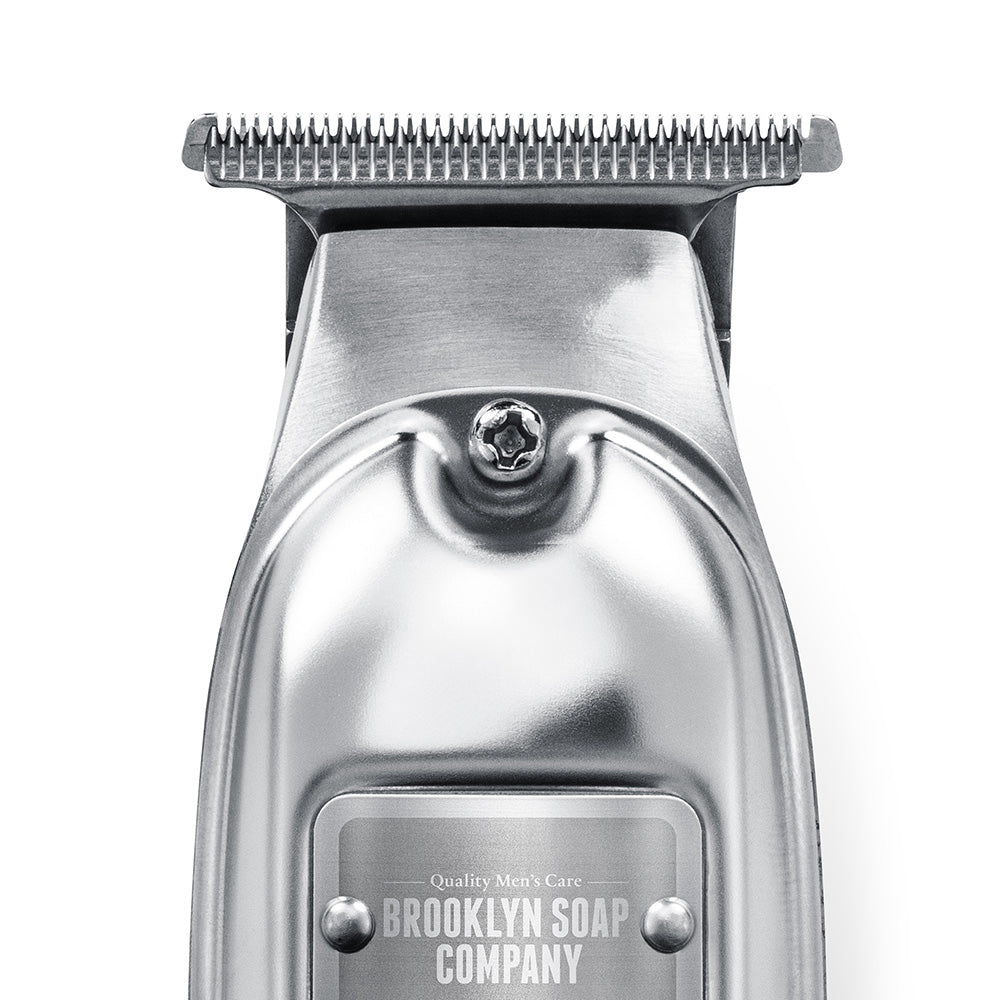
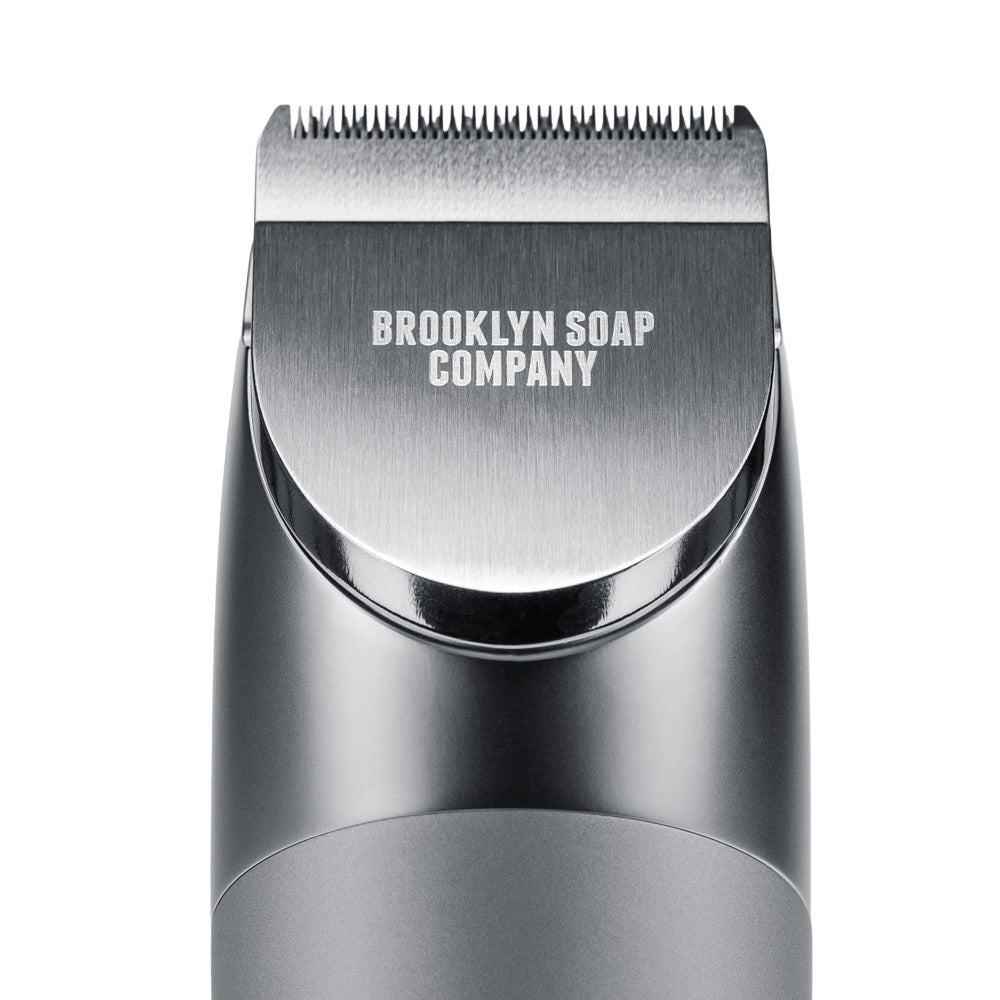
Perfect if you don't want to shave off your beard completely, but just want to shape it. Stubble beard? Neat look with a bit of length? Touching up contours? With a good trimmer, it's easy, fast, and tug-free. Unlike wet or dry shaving, the natural texture of your beard is maintained – you just decide how wild or accurate it should look. And if you think all trimmers are the same – nope. The Brooklyn Blade was developed for men who are serious about their beard care. Sharp stainless steel blades, strong battery life, and a design that looks good next to your sink. Simple, precise, strong – just like your beard.
Here's how to insert the blade into our safety razor:
 |
 |
 |
|
Step 1: Unscrew the head of the safety razor from the handle by turning it. |
Step 2: Insert a razor blade into the pre-shaped slot. |
Step 3: Screw the head back onto the handle. You can then start shaving. We recommend using one blade for 3 – 5 shaves, depending on whether you're shaving completely or just shaping your beard contours. |
Find the perfect shaving tool
IV. Dry Shaving: 3 Steps to a Smooth and Fast Shave
#Step 1: Pre-Shave Routine
Before dry shaving: thoroughly wash your face and hands. For oily, normal, or combination skin, we also recommend a face wash or a gentle exfoliant. Simply apply a few pumps, massage in, and rinse thoroughly to prevent razor burn and redness. Tip: Place a hot, damp towel on your face for a few minutes. This opens the pores, softens the hairs, and gives you a small spa moment.
#Step 2: Dry Shaving
Depending on your beard length, you should trim your beard hairs briefly before shaving. Then it's time for the actual dry shave. Whether you shave with or against the grain is up to you; for sensitive skin, we recommend starting with the grain. Shave systematically: first around the mouth and chin, then neck and cheeks. It's best to always shave before showering, as your skin and beard hairs might otherwise be too soft.
#Step 3: Aftercare
Proper aftercare is essential. Rinse off product residues and hairs with cold water and gently pat your face dry with a clean towel. Whether you choose an aftershave spray or balm is a matter of taste. For sensitive skin, a balm is often the better choice. Aftershave products soothe the skin, moisturize, and have an antibacterial effect. This actively supports healing and prevents razor burn.
V. Wet Shaving: 3 Steps to the Perfect Shave
Some learn visually, others auditorily, communicatively, or kinesthetically. The first three can rejoice, because we've prepared a video in addition to text. For kinesthetic learners, however, it means: Practice, practice, practice (and apply our tips and tricks).
#Step 1: Soak
A wet shave is ideal after showering, as the hot water opens the pores and stimulates blood circulation. Just washing your beard and face doesn't replace showering, though! Take your time so your beard is optimally prepared for shaving.
#Step 2: Lather Up
Whether you use shaving foam, shaving oil, or shaving soap is entirely up to you. Lather the product either in your hands or with a shaving brush in a shaving bowl and apply it generously to your face.
Important: Massage the lather in thoroughly with circular motions so that it doesn't just sit on the beard hairs, but reaches the skin.
#Step 3: Shave
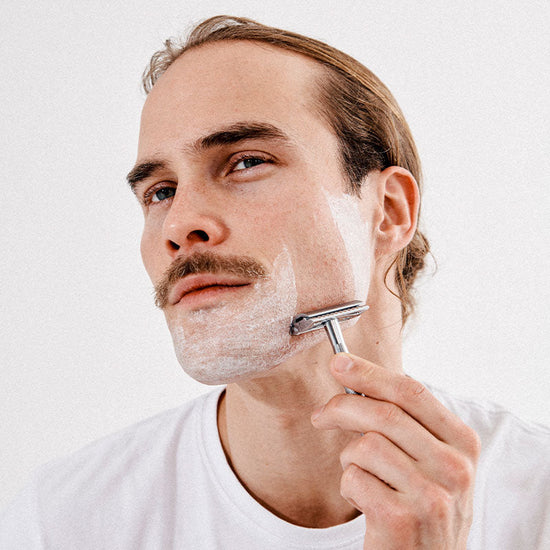
Whether it's a safety razor or a straight razor, the blade must be sharp! Always shave with the grain of your beard hairs first. Only if individual areas are not clean enough, you can carefully shave against the grain. Gently pull your skin taut with your fingers so that the blade glides better. Start at the sideburns and try not to go over the same spot more than 2-3 times. It's best to shave your mustache diagonally downwards, always with the grain.
Tip: Regularly free the blade from beard hairs, either by rinsing with water or, for stubborn residue, with an old toothbrush.
Get the full grooming power for your beard style
Sharing is caring!
What's your top shaving tip? We look forward to hearing from you on Facebook and Instagram !
Your Brooklyn Soap Team/Academy
FAQ
Where do I shave my beard on my neck?
For a close shave, it's very simple: just remove everything. For the contour line, it helps to orient yourself on an imaginary line. This runs from your ears to your Adam's apple. This is about one to two finger-widths above your Adam's apple; everything below that should be shaved. Start here and shave upwards in a slight U-line towards your ear. It helps to pre-trim the contour with a trimmer without an attachment and then simply remove all remaining hair underneath with the shaver or trimmer.
When and how often should I shave my beard?
Depending on hair growth and desired beard style, daily or every few days. For example, if you have very strong beard growth and want a clean-shaven face, you will probably need to shave daily. It's different for moderate growth and a full beard – here you will probably only re-shave the contours every 2-3 days and only trim the rest occasionally. As you can see, there is no right or wrong here. From a hygienic point of view, it is only important to wash and care for your beard regularly, because yes, some germs naturally accumulate in the hair. But that doesn't mean you always have to shave your beard smooth. Care is the be-all and end-all here.
In which direction should you shave your beard?
Before you start: Take a good look at your beard. The direction of growth of your beard hairs is crucial – because if you shave against the grain, it can be closer, but it also irritates the skin more. Especially with sensitive or oily skin, this can lead to irritation and ingrown hairs. Our tip: Feel your face with your fingers – where the hairs feel rough, you are shaving against the direction of growth. If it feels smooth, that's with the grain. Especially on the neck, beard hairs often grow in different directions – so take a moment to really "read" your beard.
Does shaving make your beard grow faster?
In short: No. Even if it feels that way – that's a myth. Shaving only affects how your beard looks, but not how fast or densely it grows. What you do is cut the blunt hair tip – this sometimes makes the beard appear coarser or darker. However, this does not affect growth.
How long should you not shave your beard?
If you're aiming for a full beard, it's worth not shaving at all for four to six weeks – not even to "shape it". After that, you can slowly start trimming. Important: Be patient. And: Don't forget to care for it! Shampoo, beard oil & co. keep your skin and hair balanced.
How do you achieve the perfect beard line when trimming?
The difference between "wild" and "intentionally messy"? The contours.
Cheek line: Draw an imaginary line from your ear to your mustache. Everything above that is cleanly shaved off.
Neck line: Two fingers above your Adam's apple. This is approximately the point where you should stop shaving. Everything below that can go.The difference between "wild" and "intentionally messy"? The contours.
Cheek line: Draw an imaginary line from your ear to your mustache. Everything above that is cleanly shaved off.
Neck line: Two fingers above your Adam's apple. This is approximately the point where you should stop shaving. Everything below that can go.
Discover more shaving care tips in our Academy

Read more

Growing a Beard: 12 Weeks to a Full Beard First things first: good decision! But how exactly do you grow a beard? We'll show you some t...

Beard itch? Our tips against annoying itching Scratching is not a solution. Even if you see no way out, let us help you!Annoying beard itch is somethi...